One of the first things that I consider when deciding where to visit is the presence of waterways or wetlands. Not for hydration purposes (though a water filter stays in the pack just in case) but because those areas tend to be most full of life. There’s beauty to be found in deserts and atop dry ridges- and life there too- but the midwesterner in me loves a good swamp. Maybe I’m just more of an ogre than I thought.
Though Indiana is among the states which have lost the highest percentage of wetlands over time, mainly to farming and development, some remote locations avoided this while other projects were eventually allowed to return to their natural state. West Lafayette’s Celery Bog, for example, was farmed until around the 1960s until they gave up on fighting with the constantly rising water levels in the fields, at which point it was left to revert back to the protected natural area that it is today. The bog is best known for its birding, but there’s much more to be found.
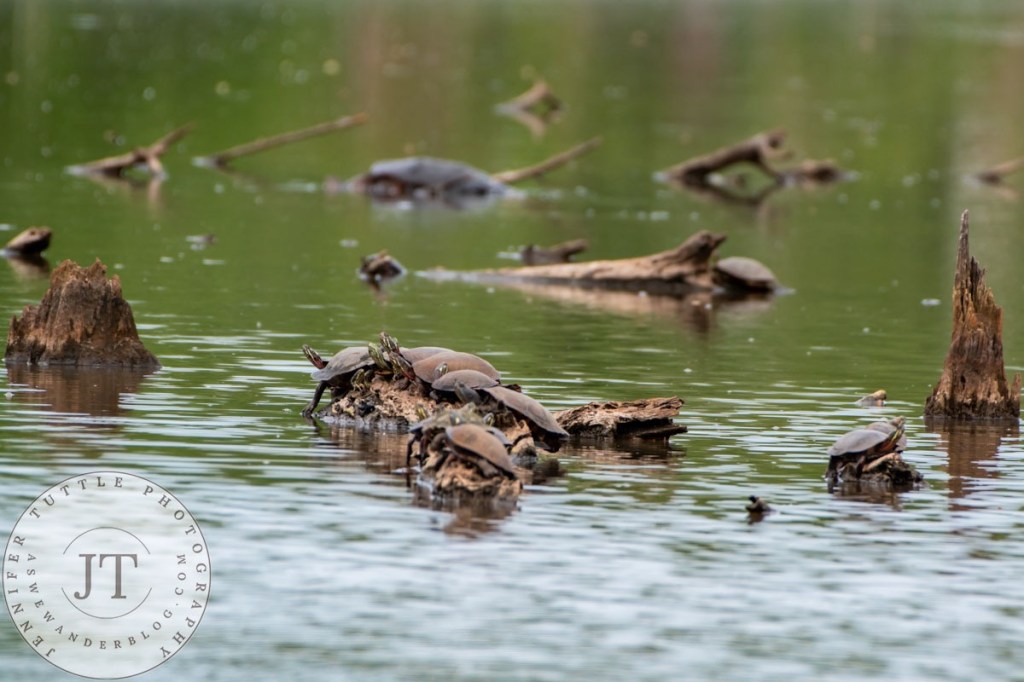
This includes, of course, turtles. As soon as winter retreats, they come out in force, and not just in the bog. They’re an important indicator for healthy fresh waterways, which is also an important concept in reverse: Their lack is likely to indicate water quality concerns. Plus, they’re cute, and considering that autocorrect tries to tell me that I am one sometimes, I have a soft spot for the little nerds. (Or when there are snapping turtles around, big nerds.)
After some rainy days, the turtles were enjoying the improved weather. I noticed the ones in the foreground of the above image first: Mostly painted turtles and pond sliders, with a single musk turtle in their midst and potentially a map turtle or two.
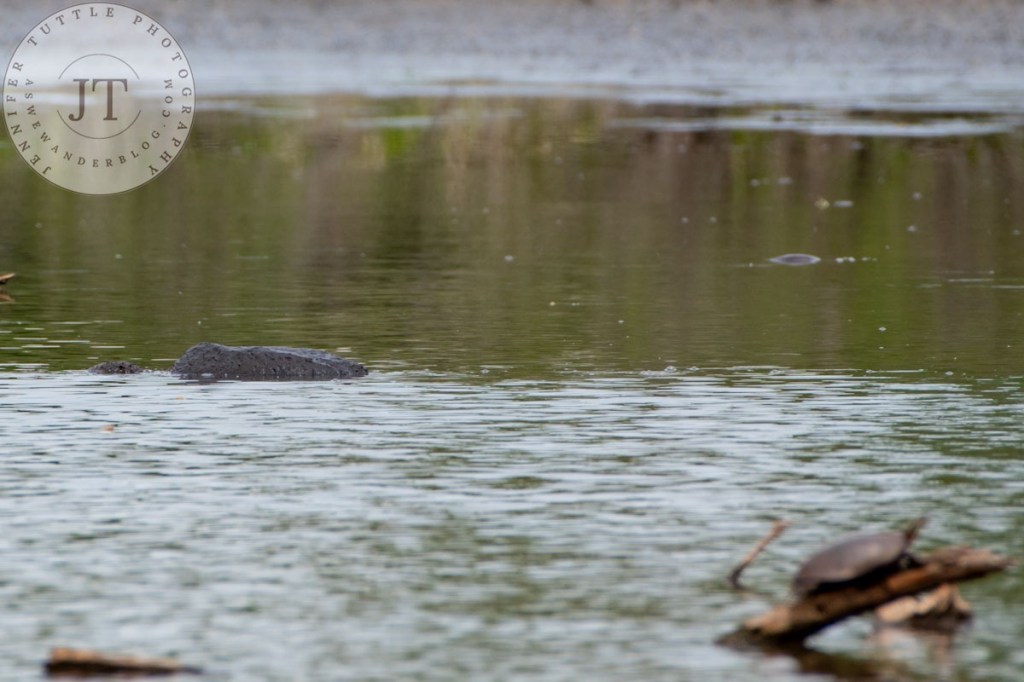
But nothing perches atop that big boulder in the back because it’s also a turtle, and one that deserves the deference. The size difference between them is impressive: While the largest of the other species may grow to have shells nearly a foot long maximum, a big Eastern Snapping Turtle can reach almost double that size.
As obvious as something that big would seem, they can be surprisingly easy to miss. With their shells often coated in algae and their preferred hangout under the water, they blend in much better than their smaller cousins. You may have had one in the swimming hole and not even known it.
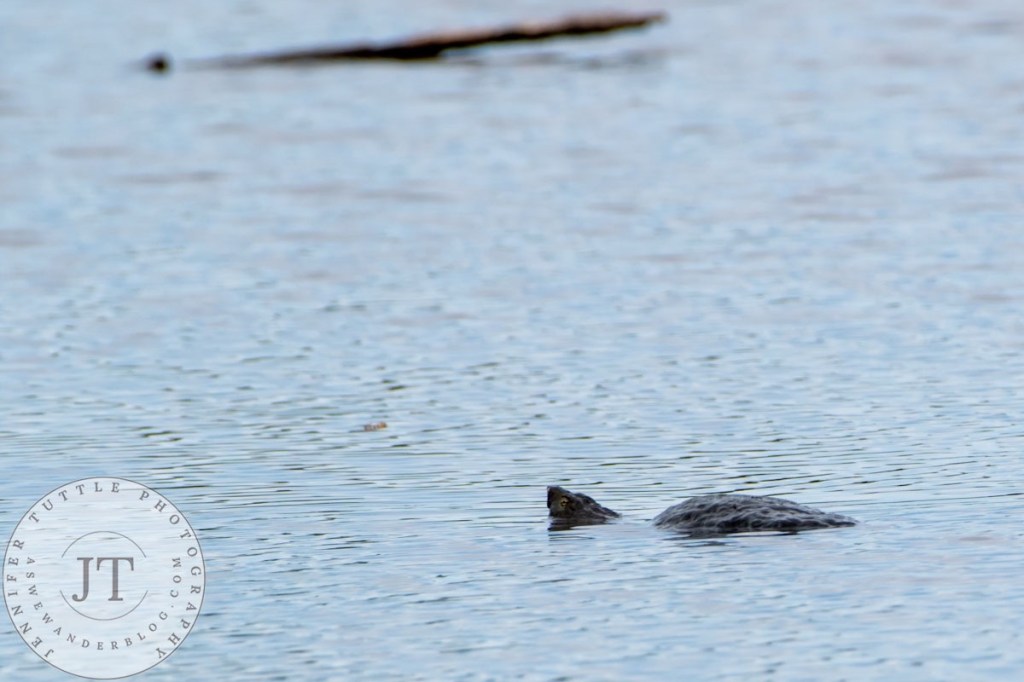
Though they have a bad reputation as combative animals, they’re not arbitrary or unduly aggressive. Approaching a snapper closely ashore may cause you to be perceived as threatening, but in the water they tend to be more docile and curious, sometimes bumping with their noses as they try to figure things out.
So there you have it. Don’t you dare boop the snoot- but if you’re lucky, the snoot may boop you.

Leave a comment