Many animals have symbolic associations. An obvious example for Americans is the Bald Eagle: Consider the attributes that come to mind. Maybe you think of patriotism, or strength and freedom, or maybe just Team America: World Police. Now, repeat this exercise thinking of fish. What do you come up with?
While that’s a category obviously much broader than eagle, it is one that comes up repeatedly in different cultural contexts and belief systems. As a food source and fertility symbol, fish often signify abundance; tenaciousness too, particularly with salmon. Or if you want to get Jungian, maybe their swimming beneath the water represents subconscious things in one’s mind. In a weirdly beautiful summary for having come from a fatty acids- focused scientific journal, researchers wrote:
We find that fish have been culturally labeled as symbols of emotional well-being and social healing in religious and medical practices among independent cultures, for at least six millennia. … From symbolism in scriptural stories to incarnations of gods, fish is commonly portrayed as a pure, frequently profoundly sacred, food.
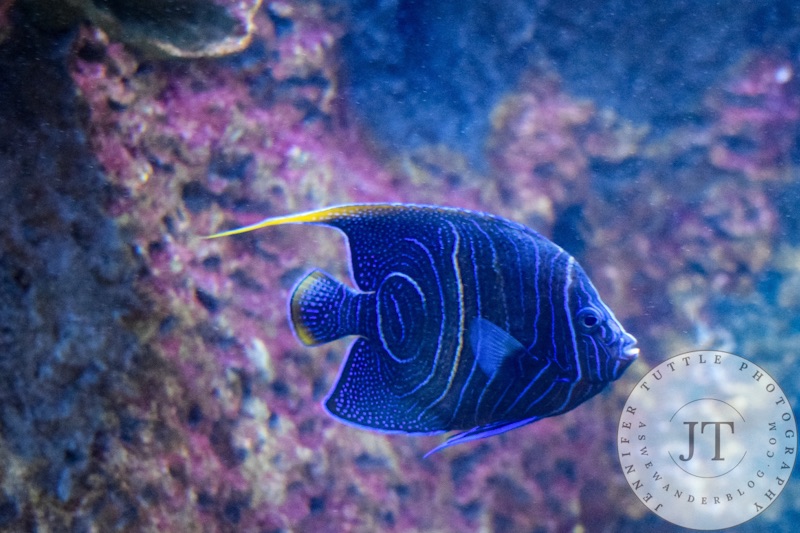
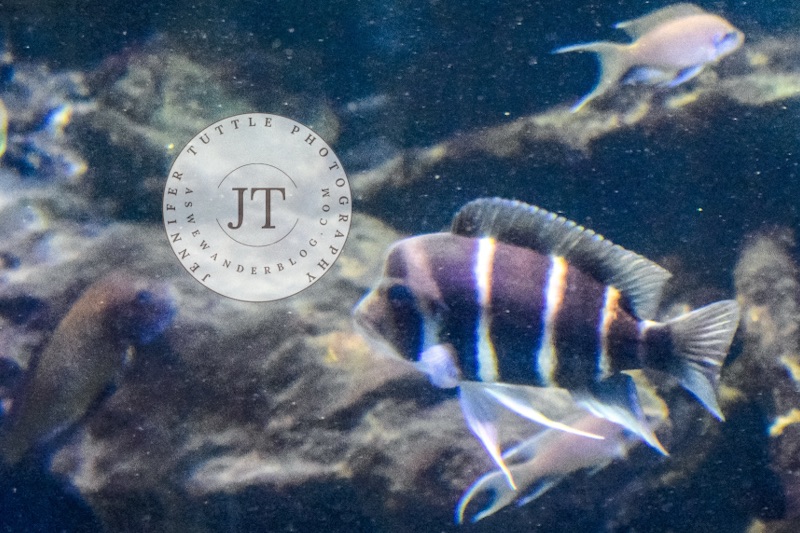
Captive: Newport Aquarium, Kentucky, 2018
It’s not surprising that fish have some sort of context nearly everywhere, since they exist nearly everywhere. As long as there’s decent water there will probably be fish, though some are even contrary enough to leave it on occasion.
Oh, and speaking of being contrary. There’s a certain ridiculous irony to the fact that we most prudish of primates have collectively sanctified these animals, many of whom display sexual plasticity, while simultaneously disparaging trans and intersex people. While acceptance of the queer community has generally increased over the last several years and decades- particularly in comparison to some of the history we’ve discussed– these groups remain particularly marginalized. It seems odd that while the concept of love who you love has gained traction, be who you are should still present such difficulty, yet these people more than any others get accused of “going against nature.” Perhaps it is that behaviors can be explained away more easily than bodies, though I don’t care to dig through exclusionary garbage to find other rationalizations for prejudice.
Let’s talk about nature.
Anyone who had to endure hapless well-wishers after a breakup has heard about how there’s lots of fish in the sea. It’s trite and irrelevant but not untrue: Worldwide, there are well over 30,000 fish species, and they display an astounding amount of diversity. By definition, they are animals highly adapted to underwater environments, which is obvious with all the gills and swimming and such; it’s almost silly to define something that broadly. But just like some of the weird super-specific OSHA requirements you hear about from time to time, definitions like that exist because of some necessity.
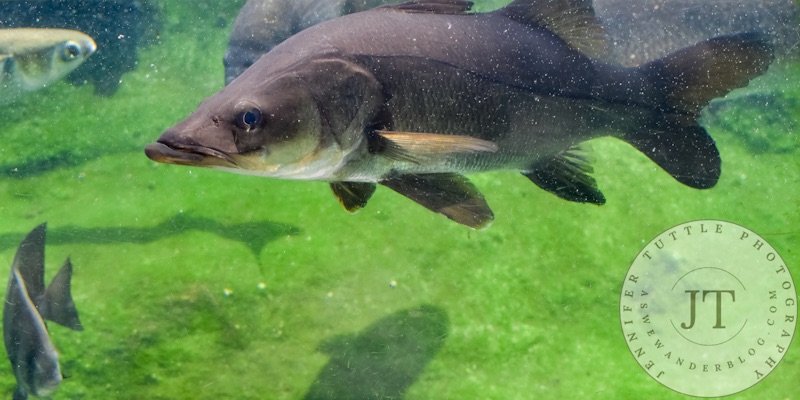
Captive: South Carolina Aquarium, 2023
Lampreys of the jawless class of fish Agnatha don’t resemble stingrays of the cartilaginous Chondrichthyes who likewise hold little similarity to bass or bluegill or oarfish or eels, or- enough! Those last several are all bony fishes, Osteichthyes, and more specifically, those are all teleosts, or ray-finned fishes.
Even within the teleosts, though, we still can’t say much more than that they have bones, developed jaws, and symmetrical tails. Not even, as suggested earlier, to declare that they have to stay in the water: while mudskippers and lungfish are fairly well known, the Mangrove Killifish is another that can survive up to two months on land- and that’s not even its most extraordinary feature.
While sexual plasticity is incredibly common in plants, it is known to occur in animals as well. These traits are found in an estimated 5-6% or more of all animal species; if we were to exclude insects (because let’s face it, most of you want to anyway) then that number rises to a full third of animals. Invertebrates form the vast majority of this list but fish dominate the vertebrates, though there are also amphibians and even mammals who can either change their sex once or more in their lifetime or who are able to produce both male and female sex cells at more or less the same time.
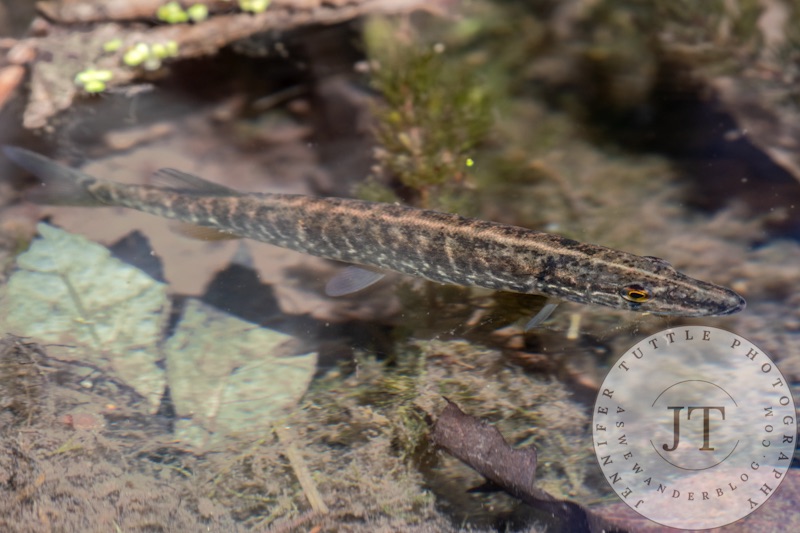
Wild: Illinois, 2025
Let’s stop and discuss semantics for a moment before continuing, because the words we choose are important. Science names this hermaphroditism. But while I’m the kind of pedantic asshole who loves to amass as many syllables as I can, I dislike the word hermaphrodite. One could argue that it’s used without connotation in science- but you only find it in the wild as a slur. So while the term might not fit perfectly in a human context, I’ll be referring to them instead as intersex. Most of these discussed would furthermore be called functionally intersex, meaning that the attribute is built into their evolutionary reproductive strategy. While there are hundreds of examples of these species within fish alone, the number becomes incalculable if we expand the scope to include species with occurrences of intersex individuals- because that would mean a vast percentage (if not all) species that have sex characteristics.
While people sure love to try to split things into binary systems, nature couldn’t care less.

But wouldn’t sex-changing fishes be trans, you might ask? Maybe. But without data on their gender identities and intentions we start to tread a slippery slope of presumption. Better go learn to speak fish and conduct some more surveys- I hope you’re good at holding your breath. (I guess you could ask the killifish while it’s ashore, but that’s nowhere near as fun.)
Fish are not people. Nor are moles or worms or any of these other species who are functionally intersex- or any of the others, for that matter. But even more importantly, trans and intersex people are people. Don’t forget it.
But I digress.
There are several different mechanisms in which the fish portray these attributes. Three of these occur sequentially. A species can be protandrous, in which a male could change into a female under the right circumstances such as in the case of clownfish, or more commonly protogynous, female to male, which accounts for 80% of the intersex fishes such as several wrasse species and many others. This can even occur bidirectionally in which an individual can potentially change back and forth multiple times over a lifetime. This particular trait has been found in a couple dozen species of gobies and a single species of dottyback, though none yet in front of my camera.
While the majority of intersex fish species are sequential, nearly one in five is simultaneous. All of the families of deep-sea fishes include at least one exemplar except the dragonfish, though they have a protandrous one. But not all of these simultaneously intersex fish are confined to the depths, such as the Harlequin Bass which can be found around reefs throughout the Caribbean.

Captive: Newport Aquarium, Kentucky, 2018
Are you keeping up? Great. Because there’s also a few androdioecious species, in which there is a binary of male and intersex with no females at all, like some rivulids. Likewise, there are species with a female-intersex binary, called gynodioecy, though we’re now talking nine total recorded species: A couple each of sponges and marine worms, three anemones, a coral, and a single vertebrate- the Atlantic Hagfish.
Not to mention the bacterial sex determination that we’ve seen in pillbugs and other arthropods, which have in that case deleted the female sex chromosome completely while simultaneously causing the population to develop as female. Don’t worry for the future- we’ll just turn on parthenogenesis, allowing unfertilized eggs to develop.
Or if we were to start talking about plants, we could add stuff like triodioecy, or gynomonoecy and andromonoecy. Or how about polygamomonoecy?
Yeah, I was lost after the pillbugs, too. One big word led to another and now I’m in over my head and my spellcheck is mad at me. I’m sticking with animals.
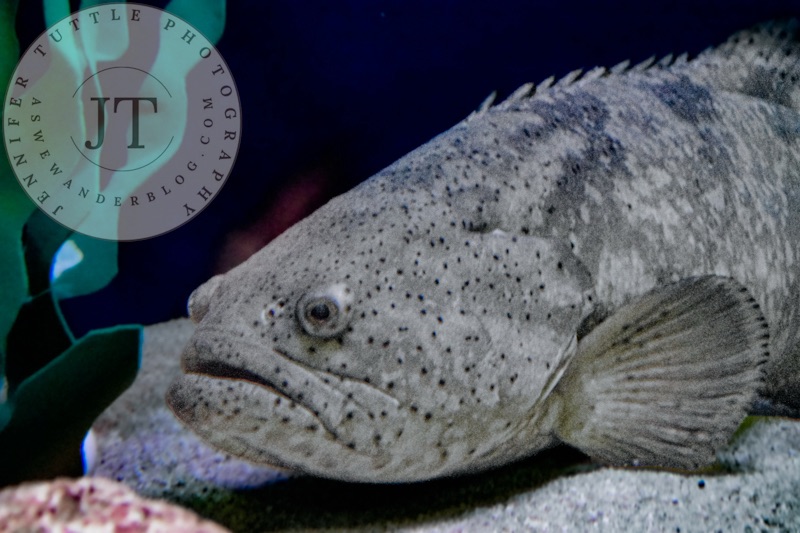
Captive: South Carolina Aquarium, 2023
So remember our little killifish? It’s pretty special. Not only is it a pro at extreme environments, but it doesn’t mind going it alone: while technically an androdioecious species, the overwhelming majority of these fish are simultaneously intersex, with very few males. But we’ve seen that itself is not particularly remarkable- nor even the fact that you might encounter it while dry. What is really interesting about these fish is that uniquely of all the vertebrates, only they and one other closely-related species are able to practice selfing. Like parthenogenesis, selfing allows a single organism to reproduce, but it differs in that the individual produces both their own sex cells and fertilizes their own egg- effectively, sexually reproducing with itself.
There’s a pretty concise phrase that comes to mind when considering that strategy, but it’s ruder than I’d like toward our killifish friend. I’ll let you puzzle it out.
While this has once again been an unconventional subject, it helps illustrate the breadth of nature’s creativity in different sex expressions. Though humans are not a functionally intersex species, we have intersex individuals nonetheless, who are just as valid and legitimate as anyone else. A glitch would not occur so tenaciously through so many diverse systems.
2025 Me: Thank you. They’re protogynous, btw.
Captive: Newport Aquarium, Kentucky, 2018
Furthermore, since we as humans (sometimes) possess consciousness and communication, we can also make the conclusion that I avoided earlier about fish due to lack of data: Transgender people are real, too. While the intersex community suffers from erasure, trans people currently bear the brunt of being the scapegoat de jour, getting blamed for all manner of nonsense while their legal protections are chipped away for daring to express their identities while they live their lives.
Frankly, I think it’s weirder to spend time obsessing over someone’s genitals who you don’t intend to sleep with, especially to then waste even more effort in hating them. It just sounds exhausting. So I challenge you this: Next time you hear hateful rhetoric, shut it down. The sooner it ceases to be normalized, the sooner we can start treating all people as they deserve to be treated. Here’s your chance to be on the right side of history. Love thy neighbor, no matter what’s in their pants.
And if anyone starts paying undue interest to your genitals? Tell them to make like a killifish.


Leave a comment