
Those who are familiar with Indiana caving may recognize this cave, but I won’t be sharing its name or location. Cavers are a secretive bunch with good reason: It’s a risky venture for the unprepared as some caves- like this one- are prone to flooding, and an injury or equipment failure in any cave could become catastrophic.
Of course, you can’t plan for everything, and there are both rookies and old-timers that would confirm that if they were still around to do so. You plan for what you can, with things like a call-out plan and sufficient light sources, and you fill in the gaps with a hefty dose of lunacy. Who the hell wants to go run around underground, anyway? (Me!)

There’s something irresistible about exploring places rarely seen. It’s the same reason that I backpack. But busy as I’ve been with that and everything else, caving fell to the wayside, so I’m glad to be getting back into it after a hiatus of a couple years.
And what a return! Deep water near the entrance meant inflatable rafts or swimming. Eventually we emerged onto drier ground along the stream passage, which gave me the opportunity to unpack the camera and look for creatures in the flow and pools as we walked.
Most prevalent were those cute little lobstery critters that have nearly as many names as appendages: Our group of half a dozen midwesterners called out crayfish, crawfish, and crawdads as we pointed them out. The most eye-catching are the the ghostly blind cave crayfish, pale to translucence, who have never felt daylight and could never hope to see it.
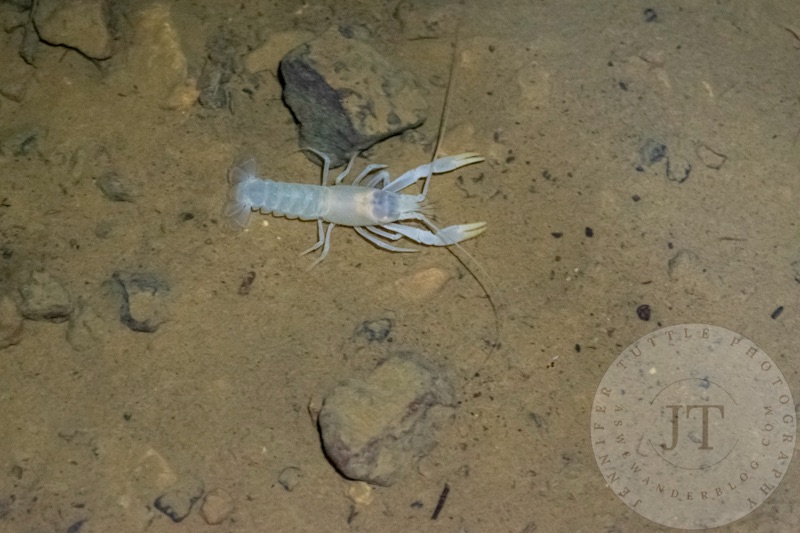
Even more exciting of a find were a few cave fish that were swimming in the waters. Like the cave crayfish, their eyes have been lost to irrelevance since they spend their entire lives within the cave. They’re also cool examples of convergent evolution: Though similar populations of fish can be found in different caves, they’ve achieved these subterranean adaptations independently of each other after their own distinct ancestors washed into their new habitats long ago.
Near the end of the line for us, where the cave began to lower into a stoop-walk then crawl that made my recently-healed ribs consider revolt, we found a young Fowler’s toad that had apparently washed in, sitting tall on its back legs and watching our headlamps as if the long-lost light of day had come to its rescue. Unlike the fish, this little dude had no evolutionary hopes, so we packed it out with us and released it aboveground where it belongs, like a cave rescue in miniature.
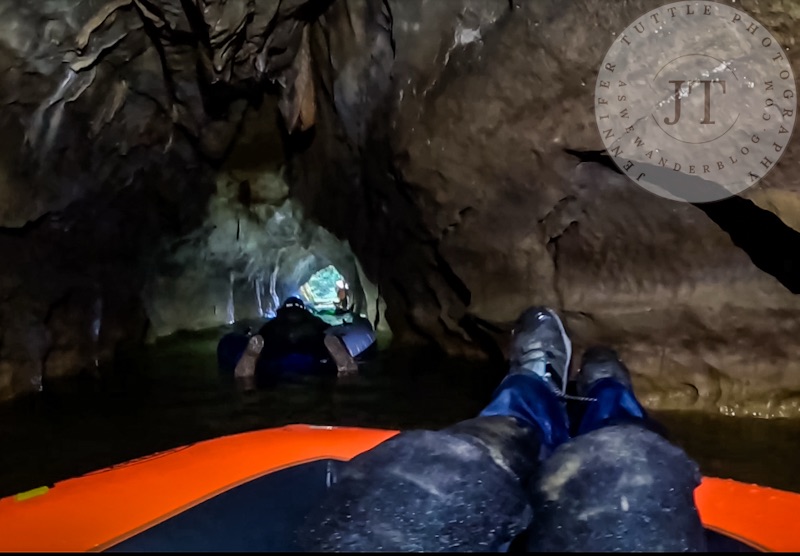
We floated out, packed up, and went back to our lives. Time underground came out to be about three hours; even with drive time, everyone was home by evening unless they chose otherwise. That’s an advantage that backpacking can never beat- a unique landscape hidden right below your feet, no tent required.
Find more photos in the gallery here!

Leave a comment